

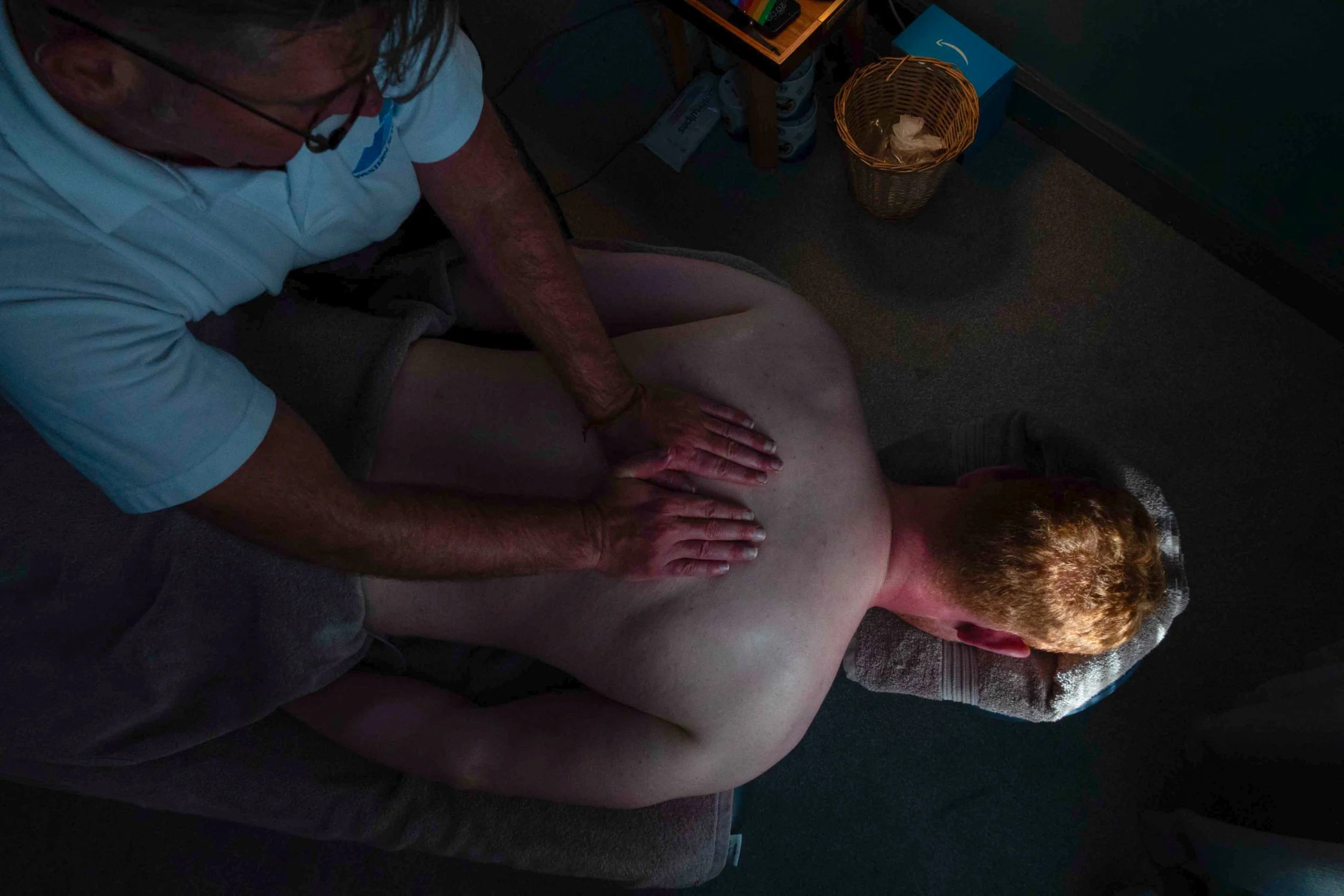
No Pain, No Gain? Why "Smashing" Your Muscles Isn’t the Goal
Think a massage has to be agony to be effective? Think again. I’m breaking down the difference between "therapeutic intensity" and "bad pain," and explaining why "smashing" a muscle actually stops it from healing. Discover the secret to a deeper, smarter recovery.
If I had a pound for every time a client climbed onto my table, took a deep breath, and said, "Don't be afraid to really get in there, I can take it," I’d probably be retired on a beach by now.
There is a massive misconception in the fitness and wellness world that for a massage to be "working," it has to be agonising. We’ve been conditioned to believe in "no pain, no gain." We think that if we aren’t grippping the sides of the table and gritting our teeth, those stubborn knots aren't going anywhere.
But here is the truth: If you are tensing up against my pressure, we’ve already lost the battle.
The Science of "Effective" Pressure
When I perform a Deep Tissue or Sports & Remedial session in my Cambuslang studio, my goal isn't to see how much pain you can tolerate. It’s about effective pressure.
Your body has a very clever built-in defence mechanism. If I apply pressure too quickly or too hard, your nervous system perceives it as a threat. Your muscles will naturally contract to protect themselves. If I try to "smash" a muscle that is actively tensing against me, I’m not actually reaching the deep layers—I’m just bruising the surface.
The "Good Hurt" vs. The "Bad Hurt"
There is a world of difference between therapeutic intensity and actual pain.
The "Good Hurt": This is that localized, "scratching an itch" feeling. It’s intense, yes, but it feels like a release. You can still breathe deeply, your shoulders stay relaxed, and you feel the tension "melting" under the pressure.
The "Bad Hurt": This is sharp, stinging, or causes you to hold your breath and curl your toes. This is your body telling us to back off.
My job is to find that "sweet spot"—the maximum amount of pressure your body can accept while still staying relaxed. This is where the real change happens. By sinking in slowly and working with your breath, I can reach the deeper adhesions and fascia without triggering your body’s alarm bells.
Why I Work Slower, Not Harder
In my sessions, you’ll notice I move quite slowly. By using slower strokes, I allow the top layers of muscle to "soften" and move out of the way, giving me a clear path to the deeper tissues that are causing your chronic tension or postural issues.
It’s a conversation between my hands and your nervous system. When we get the pressure right, your body stops fighting and starts healing.
Ready for a "Smart" Deep Tissue Session?
Whether you’re a lifter at Three Peaks, a runner with Glasgow Front Runners, or just someone carrying the weight of a stressful week in your shoulders, you don't need to fear the table.
We will work at a depth that is effective for your body. No ego, no unnecessary bruising—just targeted, professional therapy designed to get you moving freely again.
Stop "powering through" the pain and start focusing on the release.
🔗 Book your 30, 60, or 90-minute session here: https://www.shannonmichaelmassage.com/book-now

The Sunday Leg Burn: Why Your Post-Cycle Recovery Matters
Calling all Glasgow cyclists! 🚴♂️ Ever wonder why your back aches after a long ride, or why your legs feel like lead the next day? My latest blog dives into the benefits of massage for recovery—from flushing out lactic acid to fixing that "handlebar hunch.
There is nothing quite like a long spin out of Glasgow. Whether you’ve been zooming along Great Western Road, heading out towards the Cathkin Braes, or just enjoying the miles along the Clyde, that post-ride "buzz" is real.
But we’ve all been there the next morning: the heavy quads, the stiff lower back, and that "how am I going to walk down the stairs?" feeling.
As a therapist (and someone who loves to stay active), I see a lot of cyclists in my Cambuslang studio. While we often spend thousands on the lightest frames or the best bib shorts, we often neglect the most important bit of kit we own: our bodies.
Why Massage and Cycling are the Perfect Breakaway
Cycling is a repetitive motion. Your legs are doing the heavy lifting, but your upper body is often locked in a static, hunched position for hours. Here is why getting on the massage table is a game-changer for your riding:
Flushing out the "Heavy Legs": After a long ride, metabolic waste can build up in the muscles. A targeted Sports Massage helps "flush" the tissue, improving circulation and speeding up the delivery of oxygen-rich blood to those tired quads and calves.
Addressing the "Cyclist’s Hunch": Hours spent over the handlebars can lead to tight hip flexors and a rounded upper back. I use Deep Tissue and Remedial techniques to open up the chest and release the tension in your neck and shoulders.
Injury Prevention: Those small "niggles" in your knee or lower back are often just tight muscles pulling on joints. Regular maintenance catches these issues before they turn into a forced week off the bike.
Supporting Glasgow’s Cycling Community: Clyde Riders
Speaking of getting out on the bike, I am buzzing to see the growth of the local scene, especially with groups like Clyde Riders (@clyderiders).
They are a fantastic, inclusive cycling club right here in Glasgow, making the sport accessible to everyone regardless of background or ability. Since I’m a big believer in making recovery just as inclusive as the sport itself, I’ve got a little something for their members.
The Clyde Riders Perk: If you are a member of Clyde Riders, you can grab a discount on your treatment! Just mention that you’re a member when you book or during your session. 🚲
Book Your Recovery Session
Whether you’ve just finished a century ride or you’re a casual commuter, don’t wait until you’re in pain to look after your legs. I offer 30, 60, and 90-minute sessions tailored specifically to how you ride.
My studio in Cambuslang is tucked away from the city centre noise, making it the perfect spot to decompress and get your body ready for the next climb.
Ready to shift gears on your recovery? Click here to view my diary and book in.
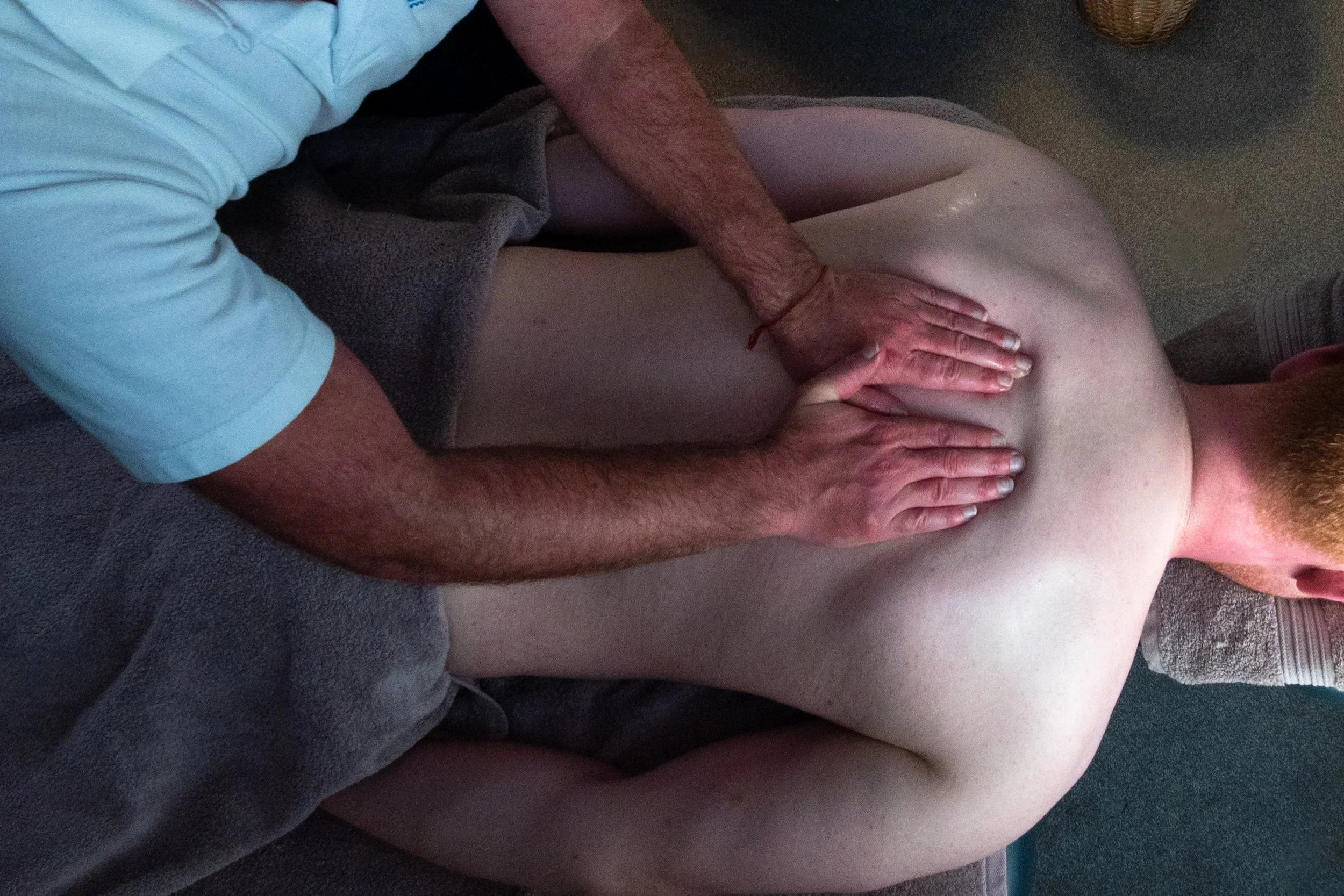
Going Deeper: Why I Use Deep Tissue Massage to Tackle Chronic Tension
Sometimes, a general massage isn't enough to reach the source of your discomfort. From 'tech neck' to stubborn muscle knots, I explain how my targeted Deep Tissue sessions in Cambuslang work to break down adhesions and restore your posture. Discover how slower strokes and firmer pressure can lead to lasting relief from the chronic tension that holds you back.
We’ve all experienced that feeling—the stubborn "knot" in your shoulder that won’t budge, or the dull ache in your lower back that seems to have taken up permanent residence. When you reach that point, a general, relaxing massage often isn't enough to reach the root of the discomfort.
In my Cambuslang studio, I specialise in Deep Tissue Massage because I know that for many of my clients, the pain isn't just on the surface; it’s buried in the deeper layers of the muscle and connective tissue. Here is how I use this targeted strategy to help you find lasting relief.
Reaching the Root: My Strategy for Deep Tissue
Unlike the lighter strokes of a Swedish massage, my approach to deep tissue involves slower, more deliberate movements and intense, direct pressure. I’m not just working on the skin; I’m aiming for the sub-layer of musculature and the fascia (connective tissue) that surrounds it.
This technique is specifically designed for those who prefer a firmer touch or for those whose bodies are under constant physical strain—whether that's from heavy lifting at the gym or the sedentary "tech neck" caused by hours at a desk.
The Benefits: What Deep Tissue Can Do For You
Through my work, I’ve seen firsthand how deep tissue can transform a client’s daily life. Here are the three main areas where I see the most significant results:
1. Breaking Down Stubborn Adhesions Adhesions—commonly known as "knots"—are bands of painful, rigid tissue that can restrict your movement and even cause "referred pain" (pain that is felt in a different part of the body). By applying concentrated pressure, I help to break these down, restoring your natural range of motion and easing the tension that causes that constant, naggy discomfort.
2. Postural Correction and "Tech Neck" Modern life is not kind to our posture. Between long commutes and sitting at a desk, our bodies often "set" into unhealthy positions. I focus on the deep-seated tension in the upper back, neck, and shoulders to counteract these habits, helping you stand taller and move more freely.
3. Management of Chronic Pain If you deal with ongoing issues in your glutes, legs, or lower back, deep tissue is a powerful tool. It’s about more than just a temporary fix; it’s about managing the chronic pain that keeps you from enjoying your hobbies or performing your best at work.
Tailored to Your Body
Every body is different, which is why I don't believe in a "one size fits all" massage. In my studio, I offer 30, 60, and 90-minute treatments.
A 30-minute session is perfect for a laser-focused "tension tame" on a specific problem area like the neck or lower back.
My 60 and 90-minute sessions allow us the time to provide a full-body deep release while still spending extra time on your specific "hot spots."
Ready to get to the root of your tension? If you’re tired of living with chronic knots and restricted movement, I’d love to help you find a way forward.

Massage : The Runner’s Secret Weapon
Whether you’re training for your local parkrun or a coastal marathon, the physical toll of repetitive miles adds up. In this post, I explain how I use sports massage to help runners flush out 'heavy legs,' restore stride length, and prevent those frustrating niggles from becoming long-term injuries. Discover why professional bodywork is the secret to a faster, pain-free recovery.
As a massage therapist, I see it all the time: a runner comes into my clinic with "heavy" legs, a niggling ache in their hip, or a calf that feels like it’s about to snap. Running is a brilliant way to clear the head and keep fit, but let’s be honest—it’s punishing on the body. Every time your foot hits the pavement, you’re absorbing up to three times your body weight.
Whether you’re training for your local parkrun or preparing for the London Marathon, I believe massage should be a non-negotiable part of your training programme. Here’s how I help my runners stay on the road:
Breaking the Cycle of Repetitive Stress
Running is a repetitive, linear motion. Over time, certain muscles like your quads and calves become "over-active," while others, like your glutes, might go a bit quiet. When I work with you, I’m looking for these imbalances. By releasing the chronic tension in your hip flexors or shins, I help ensure your gait remains fluid and efficient.
Flushing Out the "Heavy" Legs
During a hard training block, metabolic waste can build up in your tissues, leaving you feeling sluggish. I use specific "flushing" techniques to encourage lymphatic drainage and venous return. This brings fresh, oxygenated blood into the muscles, which speeds up your recovery and gets you ready for your next interval session much faster.
Myofascial Release: Restoring Your Stride
Muscles are wrapped in a web of connective tissue called fascia. When you’re dehydrated or overtrained, this fascia can become "sticky," restricting your range of motion. I use myofascial release to "unstick" these layers. For you, this means a longer stride length and less friction in your joints—essentially, I’m helping you move without the handbrake on.

Why Your Job Is Trashing Your Back (and How to Fix It)
Do your shoulders ache after a long shift?
Between constant reaching and the "occupational hunch," hairdressers and dentists face unique physical strains. Discover why repetitive motion is causing your chronic pain and how targeted massage therapy can save your career—and your back.It All Begins Here
If you spend your workday behind a styling chair or hovering over a dental unit, you’re likely familiar with the "occupational hunch." It starts as a minor tightness by Tuesday and evolves into a dull, throbbing ache by Friday afternoon.
Lately, I’ve seen an influx of hairdressers, stylists, and dental professionals in my clinic. While your industries couldn't be more different, the physical toll on your bodies is remarkably similar. You are the masters of repetitive motion, and your muscles are paying the price.
The Anatomy of the "Workday Ache"
Your jobs require precision, which usually means holding your body in static, awkward positions for extended periods.
The Hairdresser’s Shoulder: Holding shears and blow-dryers at chest or head height forces the deltoids and traps to stay "on" for hours. This leads to reduced blood flow and that familiar burning sensation between the shoulder blades.
The Dentist’s Lean: To get the best line of sight, dentists and hygienists often tilt the neck and rotate the torso. This creates a massive imbalance where one side of the lower back is overworked while the neck extensors become chronically tight.
The Grip Factor: Both professions rely on fine motor skills. Constantly gripping tools leads to hyper-tension in the forearms and wrists, which—if left untreated—can mimic or lead to Carpal Tunnel Syndrome.
Why "Powering Through" Isn't a Strategy
I often hear my clients say, "I thought it was just part of the job." It shouldn’t be. When you ignore these signals, your body begins to create compensation patterns. Your brain tells other muscles to take the load, which leads to a domino effect of pain. What started as a tight wrist can eventually become a chronic neck issue.
Regular massage therapy acts as a "manual reset" for these patterns. By releasing the myofascial trigger points caused by repetitive reaching and leaning, we can:
Increase Circulation: Bringing fresh, oxygenated blood to tired tissues.
Break Up Adhesions: Smoothing out the "knots" that restrict your range of motion.
Downregulate the Nervous System: Shifting you out of "work mode" and into a state where your body can actually repair itself.
Invest in Your Longevity
You spend your entire career taking care of others—perfecting smiles and boosting confidence. But you can’t pour from an empty cup (or a frozen shoulder).
Think of massage not as a spa luxury, but as essential tool maintenance. Just as you sharpen your shears or calibrate your equipment, you need to calibrate your body to ensure you can stay in the game for years to come.
Ready to Feel the Difference?
If you’re tired of finishing your shift and heading straight for the heating pad, let’s change the narrative. I specialize in identifying these occupational patterns and getting you back to a pain-free baseline.
Don’t wait for the pain to stop you in your tracks. 👉 Click here to book your recovery session